
This is a free fortnightly newsletter about the New Zealand Net.
If you would like to be notified by email when a new edition is published, subscribe here.
Browse our Newsletter Archive and List of Net Tips.
Featured key
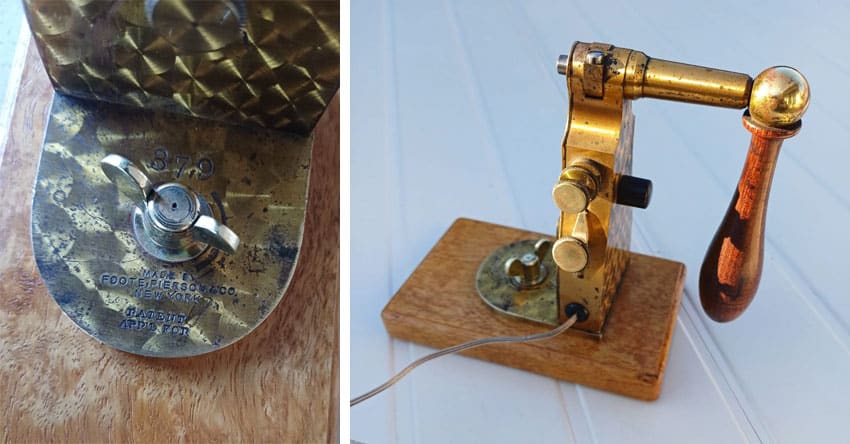
20th Century key. Photos: VK2IXV
By Herman VK2IXV
This is my Twentieth Century Key, also known as the Pump Handle Key, due to its hanging cherry-wood lever, shaped like a pump handle. The key was invented by Charles Shirley and John Skirrow and manufactured by Foote & Pierson Co., New York. Apparently it was popular with railroad telegraphers.
Shirley and Skirrow’s US patent number 685301 was lodged in October 1901 and my key is based on this patent. In the patent drawings, shown below, the rearward-extended foot (2) is fastened to the operating table with a brass butterfly wing screw (3) which can also be seen in the photo above at left.
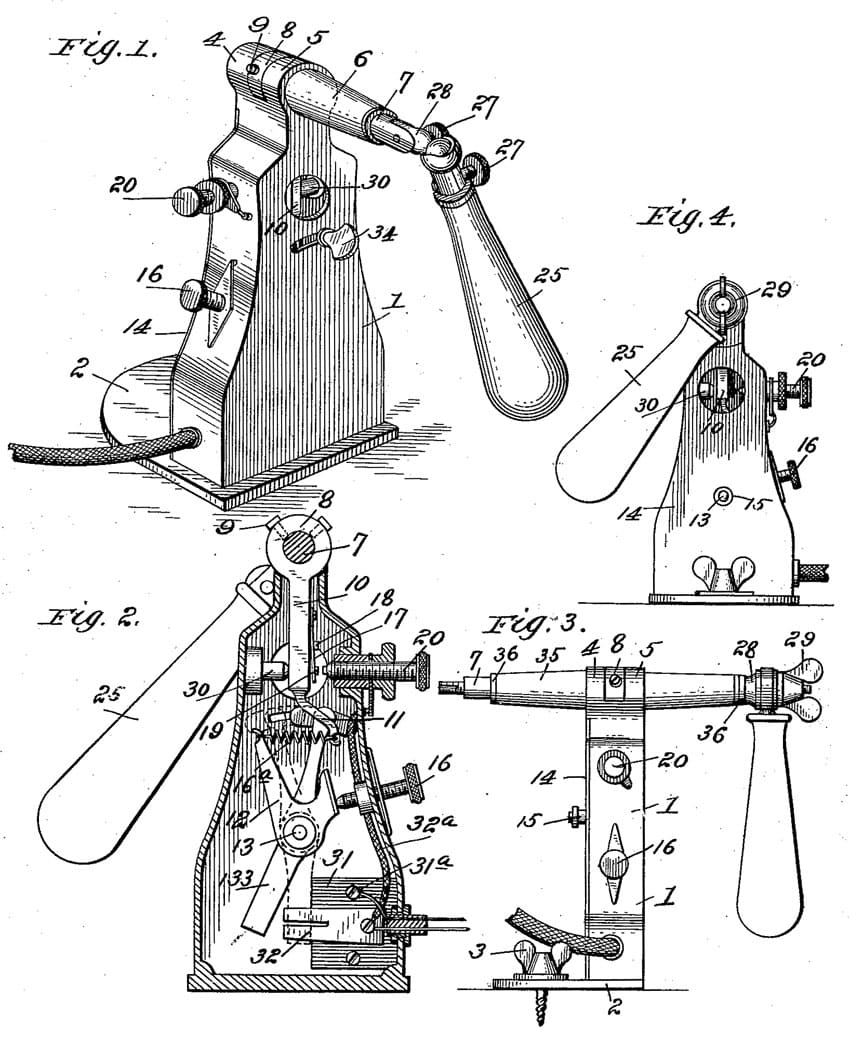
About two months later, Charles Shirley presented Patent 689426, which was for a heavy, floral-decorated, cast-iron base for this Pump Handle Key, to make it easier for the key to be relocated, as no hole was required to be bored in the operating table.
In those early days, professional landline telegraphers, employed by post offices, the military, the railroads and newspaper services, were expected to send many messages (traffic) in fast Morse code on a straight key, often for 8 to 10 hours per day. The constant up-and-down motion of their wrist could cause Repetitive Strain Injury (RSI), also known as Telegraphers’ Paralysis, Glass Arm or Carpal Tunnel Syndrome, which was, on many instances, a career-ending event. As a result, Morse keys appeared on the market promoting anti-RSI features – the 20th Century Key being one of them.
How does the Pump Handle Key work?
My Pump Handle Key strays slightly from the initial patent, which is not unusual. For instance, the pump handle remains in a vertical plane, as it has no ball-and-socket joint as in Fig. 1 of the patent. Also, the round peephole (30) to watch the keying contacts, is at the other end of the vertical case.
From the patent drawings, I am using mainly Fig.1 and Fig.2 to indicate a few features of this key. Screw 9 tightens collar 8. If loosened, the pump handle can be put at an angle convenient to the sender.
The key is operated by grasping the handle (25) with the palm or the fingers of the right hand and gently pushing to the left to make dots and dashes. By doing this, the handle moves in a small clockwise arc and when released, returns itself to its original position. In the patent, rocking shaft 7 is attached to contact arm 10 (in Fig.2) which strikes the end of the contact-screw 20. Sending Morse code on the pump handle causes negligible strain on wrist and arm muscles.
The black Bakelite knob 34 in Fig.1 is a sliding shorting-switch, also known as a circuit-closer. When moved to the right, it produces a continuous dash. Nut 15, underneath the peephole, fastens the back plate of the vertical case 1 and is also is a receiver for vertical pin 13, which is housed inside the vertical case.
On the left hand side is the contact spacing screw 20, and underneath it the tension spring adjustment screw 16.
The brass has an engine turned finish, a decorative technique which created a patterned finish of overlapping rings. This pattern reflects the light and adds a unique aesthetic to the key. (See photo at top left.)
On the rearward-extended foot of this key is stamped: 379 MADE BY FOOTE, PIERSON & CO. PATENT APP’D FOR.
Although the key is easy to operate, I find it is hard to believe that it could be used to send at anything like 25 wpm.
The Pump Handle Key was never very popular, and no more than a thousand were produced.
Anyway, in 1904 Martin’s semi-automatic key (bug) took the world by storm and there was no longer any need for the 20th Century Key and other anti-RSI keys.
» Review of the 20th Century Key in the Telegraph Age, May 1901
Quick notes
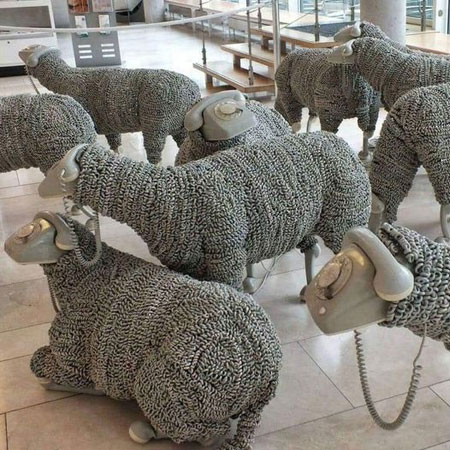
A meeting of fone operators?
Sangster Shield results. 16 operators participated in May’s 99th running of the annual Sangster Shield QRP contest on 80 metres. The top five placings were:
1. Bill ZL3VZ
2. Barry ZL2LN and Glenn ZL2KZ
4. Grant ZL2GD
5. Neil ZL1NZ
Full results and commentary.
4 keys, 1 transmitter. Matthew M0MZB has designed and is selling the KeyMaster, an interface to attach four keys to one transmitter. It’s quite clever, in that the keys can be of any type (straight, bug or paddles) and the interface automatically senses which key is being used and then changes settings on rigs that provide for CAT control. So, if the rig has only a single key jack, the interface automatically enables straight key or paddle mode. Plus it allows direct adjustment of keying speed rather than having to dig into the rig’s menus. See videos.
Photo flashback

Amateur radio at sea in 1981. Photo: ZL1NZ
Maurie returns to ZLD
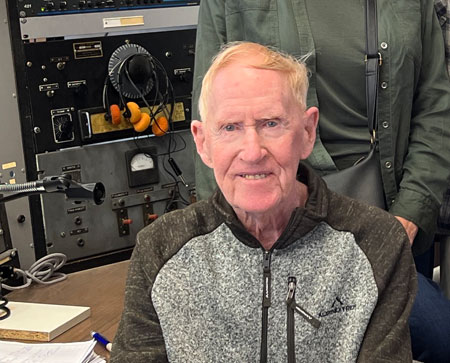
Maurie at Musick Memorial Radio Station
“My final Morse training was done at the Post Office telegraph training school at Trentham Camp. Back in the days it was known as the Gallery. We had to pass a test at 22 wpm each way for ten minutes, with only one uncorrected error (spelling mistake) and two corrections which had to be done while receiving. For qualifying as a radiotelegraph operator, the speed was 25 wpm, same conditions.”
Maurie got his ham ticket too (ZL1FK) and spent the winter of 1979 as Postmaster at Scott Base, where he operated as ZL5MC, making over 2000 amateur-band contacts – all on CW.
He still loves Morse – especially landline style, copied on a sounder, something he does via the North American morse network on the internet.
During his visit to Musick Point, Maurie recalled an incident during his early days at ZLD. He had been put straight on to the ‘ships desk’ and was told to just copy what he heard, and the supervisor would come and collect his decoded messages. One day, he had copied carefully some calls for assistance from one ship to another. When the supervisor eventually saw what he’d copied he was not happy at all because Maurie hadn’t let him know ASAP! But Maurie had had no instructions to do that, so he just carried on carefully copying all the messages! Obviously, there hadn’t been much “orientation” for the job!
Video: A straight-key professional
That’s some beautiful keying. I wonder if he ever got RSI!
Adapting to modern technology
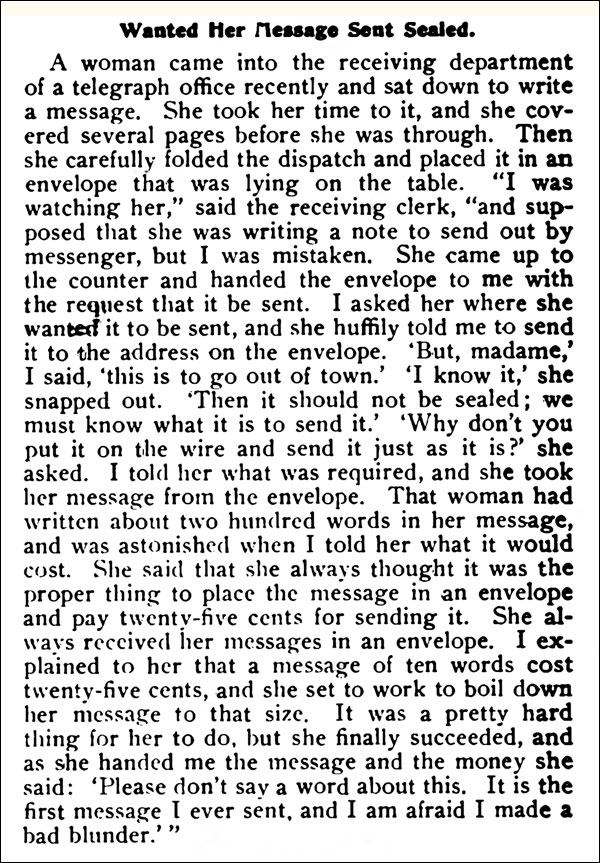
The Telegraph Age, 1 May 1901
Net tip: QRZ
We continue our look at Q signals with QRZ – perhaps the most misunderstood Q Signal.
As a question, QRZ? means: “Who is calling me?”
As a reply, or a statement, QRZ … means: “You are being called by …”
A couple of points:
- QRZ is always followed by the callsign of the station needing to be identified.
- QRZ need not be sent from the station needing to be identified. Another station could provide the identification.
- QRZ is the reply, yet many operators incorrectly send it as the question, when they should be sending QRZ?
Here’s an example when a third station steps in to provide the identification:
ZL2DEF DE ZL1ABC ZL1ABC K
   ZL3GHI DE ZL2DEF QRZ? K
      ZL2DEF DE ZL3GHI QRZ ZL1ABC K
In other words, ZL3GHI is telling ZL2DEF: “You are being called by ZL1ABC.”
The A-Z of Q Signals
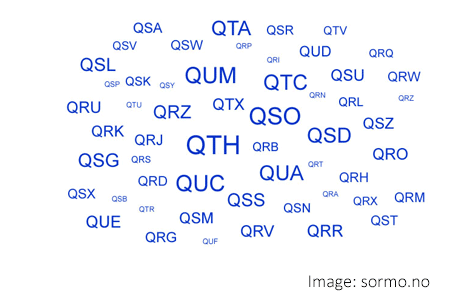
A well-run CW net is a lovely thing to experience. Communication between stations is quick and concise, and the net business is conducted with minimal time wasted.
As CW operators, we have many techniques to communicate quickly and efficiently. And if we know and use these techniques, we can often match or exceed the speed and accuracy of voice communication.
One of our most important tools is the set of Q Signals (or Q Codes), and in this series we look at the “essential” ones, in alphabetical order.
Morse challenge
Send your answer via radiogram (or email if no propagation) to ZL1NZ.
In our previous newsletter, the Morse Challenge asked why a certain Japanese key maker is named “Hi-Mound”. The answer is that the company was founded by Takaitsu Takatsuka, and the English translation of Takatsuka is high mound. Correct answers were received from VK3DRQ, ZL1ANY, ZL1AYN and ZL3TK.
Advertising archive
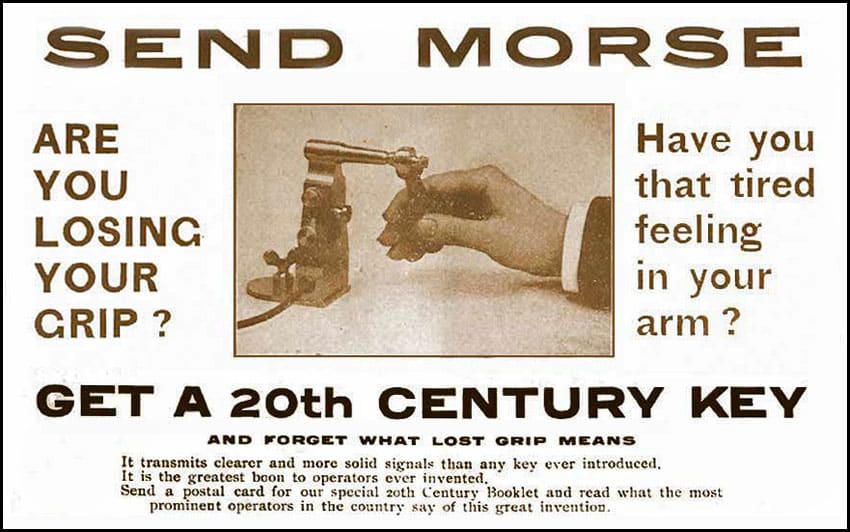
Published in The Telegrapher, 16 June 1901
NZ Net – founded 2019
Suggestions?
If you have suggestions on how to make the NZ Net better, or things you’d like to see covered in these newsletters, please contact ZL1NZ. Articles and photos will be gratefully received!
Thanks for reading, and I hope to hear you soon on the NZ Net!
—
Neil Sanderson ZL1NZ, Net Manager
New Zealand Net (NZ NET)


 Open the menu by clicking the “burger” icon at top right.
 Many menu items can be expanded to reveal subpages by clicking on the arrow. Click again to collapse the menu item.