
This is a free fortnightly newsletter about the New Zealand Net.
If you would like to be notified by email when a new edition is published, subscribe here.
Browse our Newsletter Archive and List of Net Tips.
Featured key
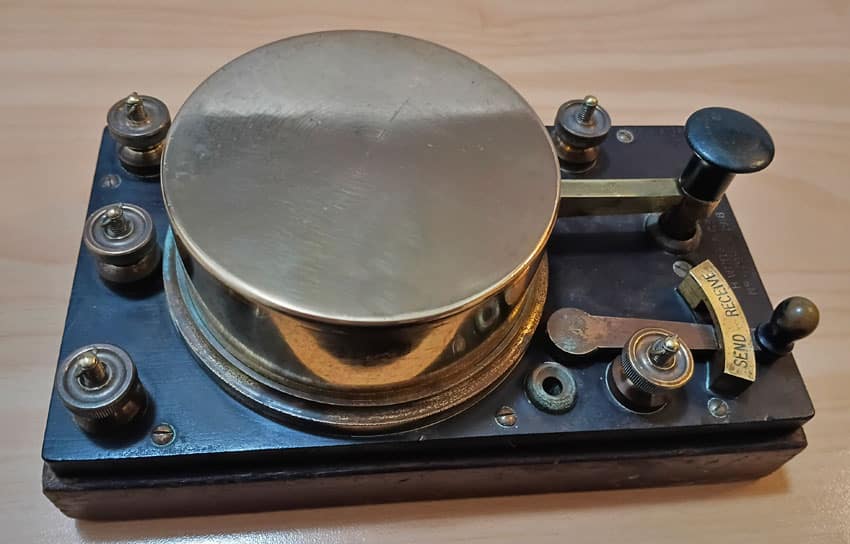
Photo: ZL1NZ
By Neil ZL1NZ
This GPO Double Current key was made by H White & Co, London, in 1918.
Double current keys were designed for use on long telegraph lines, including submarine cables, and instead of a simple on-off action, they actually reverse the current during key-up.
Such keys were made by several manufacturers and most are quite similar in appearance, having five terminals and a large brass housing (sometimes with a ground glass top) that is easily removed for adjustments.
Although they are quite large (this one is 21cm long x 12cm wide x 8.5cm tall) and mechanically complex, they have a very light and quiet action, and make a very good radio key. I’m looking forward to using this one in Straight Key Night this Sunday.
Andrew G4OEP has written several technical articles on landline telegraphy, including one on the double current system.
Quick notes
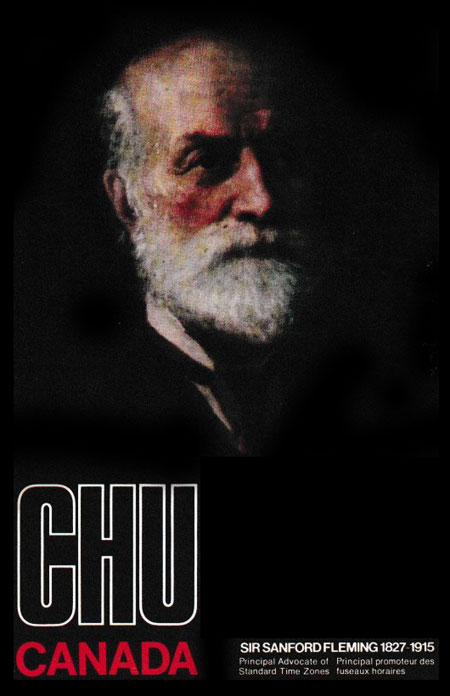 CHU to close. Canada’s time-signal station is shutting down on 22 June. CHU broadcasts highly accurate time signals on precise frequencies of 3330, 7850, and 14,670 kHz using USB with re-inserted carrier. [Listen] No reason for the closure has been announced, but clearly radio services are not considered as important as they used to be. Just two months ago, Canada shut down its 230 Weatheradio transmitters, which had broadcast continuous weather information on VHF FM.
Pictured: CHU QSL card with picture of Sir Sandford Fleming
Straight Key Night is this Sunday. Hope to hear you on the air with your straight key, 8-9pm NZT (0800-0900 UTC) on 80 metres. Get details.
The sun has been busy shooting flares towards Earth and radio propagation is pretty lousy as a result. Ordinarily, if winter conditions were poor on 80m, net control might send stations to 40m for traffic but, with things so bad on all bands, we’ve persevered on 80m and have had some good examples of stations successfully passing traffic in difficult conditions.
Null Island is a surprisingly interesting place, described by one scientist as a “digital lost and found.” Also fascinating for anyone involved with data quality, as explained in this article.
Sick of AI rubbish in search results? You can exclude most AI-generated content, including pictures, from your online searches by using this search engine: noai.duckduckgo.com.
Photo flashback
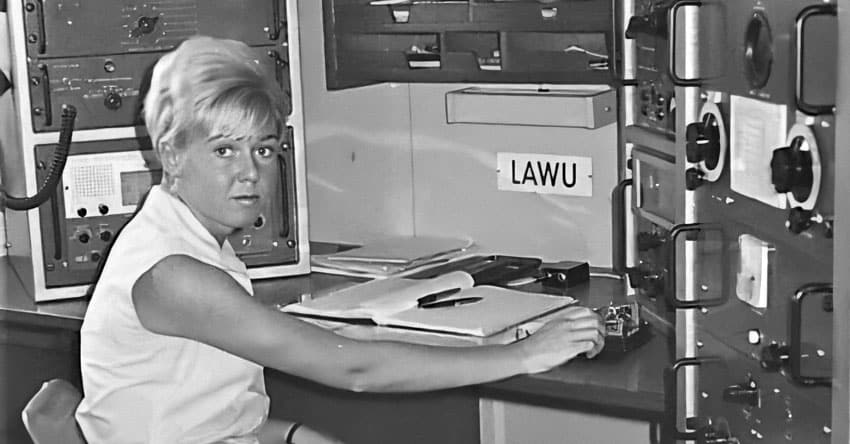
Radio room of the Norwegian bulk carrier MS Heranger (built 1968). Photo: Oddvar Ulvang, Maritime Radio group on Facebook
Net numbers
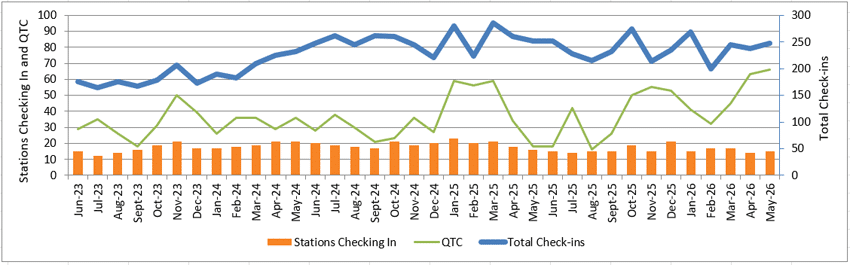
NR19 R ZL1NZ 39/36 AUCKLAND 0900Z 1JUN26
=
NZ NET
=
MAY QNI VK3DRQ 27 VK4PN 16 ZL1AJY 2 ZL1ANY 29
ZL1BDS 21 ZL1NZ 30 ZL1PX 24 ZL2GD 21 ZL2KE 9
ZL2LN 10 ZL2TE 15 ZL4FZ 10 ZL4GW 17 ZL4KX 12
ZL4LDY 5 TOTAL 248 QTC 66
=
ZL1NZ
Sparks fly in Fiji

A beach in Fiji, 1939. Photo: Leo White, Whites Aviation Collection, Alexander Turnbull Library
By Derek ZL2UH
In 1946 I was seconded to the Government of Fiji, and assigned to their Department of Posts and Telegraphs. My first job was to take over the Suva telegraph radio station VRO, which handled traffic between Suva and outlying islands. My instructor asked me to call the outstations in order, exchanging reports and traffic on hand.
All went well until I called the Savusavu station, whose call I think was VQS. The response in my headphones sounded like someone ripping a shirt in my ear. Incredulously I turned to my guide and said: “that sounds like spark!”
He replied: “Of course it’s spark, that’s all we can afford at present.”
At that time, spark had been declared illegal for some years, but when I left Suva in 1948 the station at Savusavu was still ripping shirts. How long this went on, I do not know.
Incidentally, the outstation operators were all Fijian men trained in morse, basic theory and routine maintenance at the Central Wireless School in Suva. They were good CW operators, although their spelling of telegrams often left something to be desired, but we were dealing with three languages: English, Fijian and Hindi.
(first published in Break-In magazine, Jan-Feb 1989)
Net tip: QRU
We continue our look at Q signals with QRU.
As a question, QRU? means: “Have you anything for me?”
As a reply, or a direction, QRU means: “I have nothing for you.”
This is a rare example of a Q Signal in which the reply or direction is negative.
If a positive reply is needed, it would usually be QTCx, where x is the number of messages to be sent.
The A-Z of Q Signals
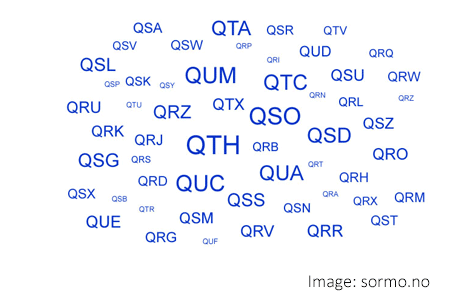
A well-run CW net is a lovely thing to experience. Communication between stations is quick and concise, and the net business is conducted with minimal time wasted.
As CW operators, we have many techniques to communicate quickly and efficiently. And if we know and use these techniques, we can often match or exceed the speed and accuracy of voice communication.
One of our most important tools is the set of Q Signals (or Q Codes), and in this series we look at the “essential” ones, in alphabetical order.
Morse challenge
Send your answer via radiogram to ZL1NZ or via email if no propagation.
Our previous challenge asked what you should do if you hear a station send “QRT”. The answer: Stop sending. Or, as ZL1ANY put it: “Shut up” – which is quite true, as anyone who has sent QRT in frustration can confirm! Correct answers were received from OE1HFC, VK3DRQ, VK3WOW, VK6RR, ZL1ANY and ZL1AYN.
Advertising archive
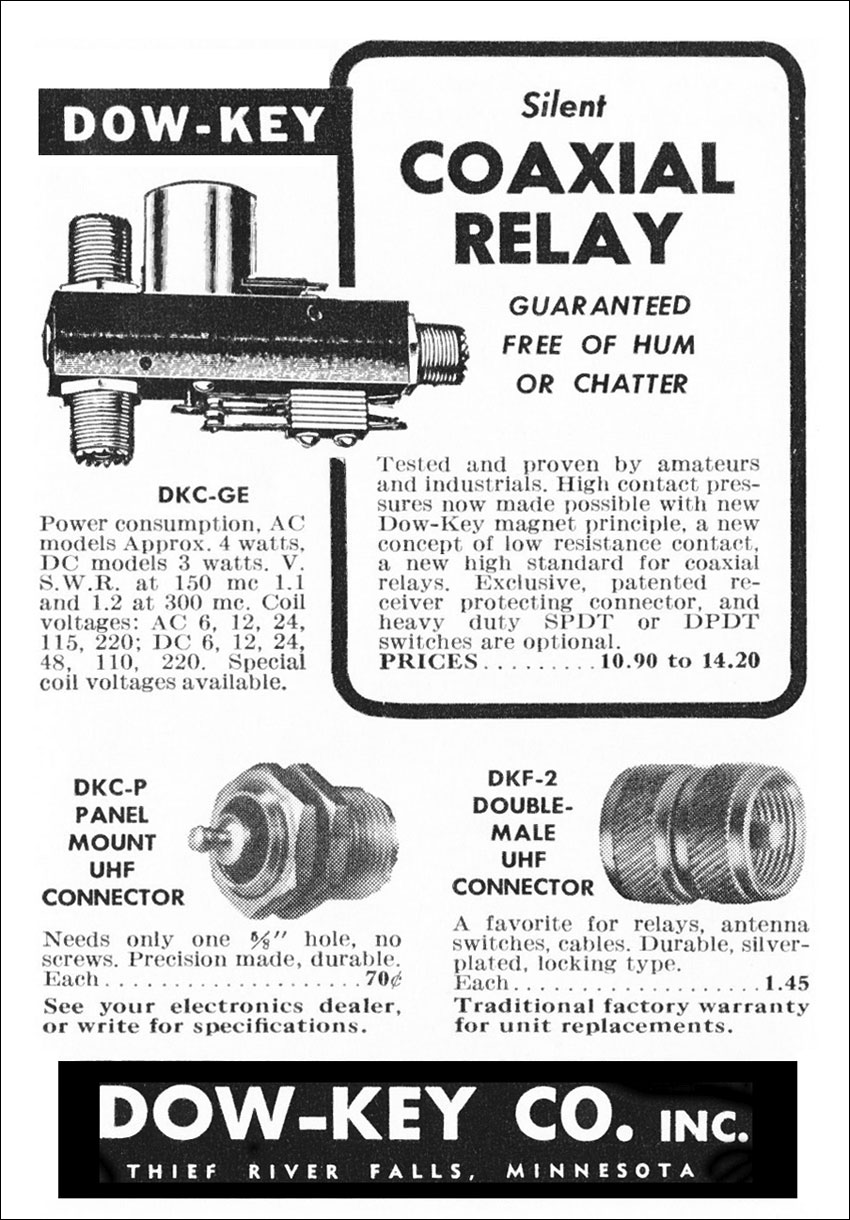
QST magazine, Dec 1958
When I was a young radio amateur, it seemed everyone had a Dow-Key coaxial relay in their shack, to handle the switching of their aerial between transmitter and receiver. Great devices. But why were they called Dow-Key? Because the company began as a maker of morse keys (See NZ Net News 184).
Suggestions?
If you have suggestions on how to make the NZ Net better, or things you’d like to see covered in these newsletters, please contact ZL1NZ. Articles and photos will be gratefully received!
Thanks for reading, and I hope to hear you soon on the NZ Net!
—
Neil Sanderson ZL1NZ, Net Manager
New Zealand Net (NZ NET)


 Open the menu by clicking the “burger” icon at top right.
 Many menu items can be expanded to reveal subpages by clicking on the arrow. Click again to collapse the menu item.