
This is a free fortnightly newsletter about the New Zealand Net.
If you would like to be notified by email when a new edition is published, subscribe here.
Browse our Newsletter Archive and List of Net Tips.
Featured key
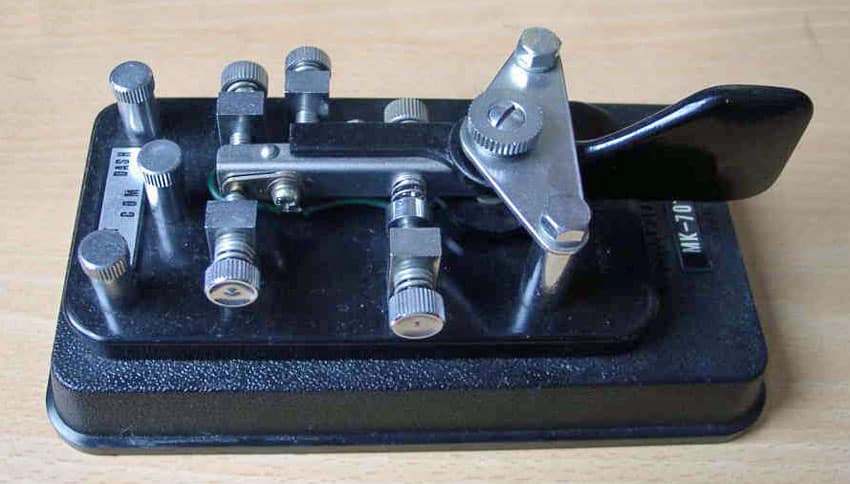
The key pictured above is a Hi-Mound MK-701.
The key pictured below is also a Hi-Mound MK-701.
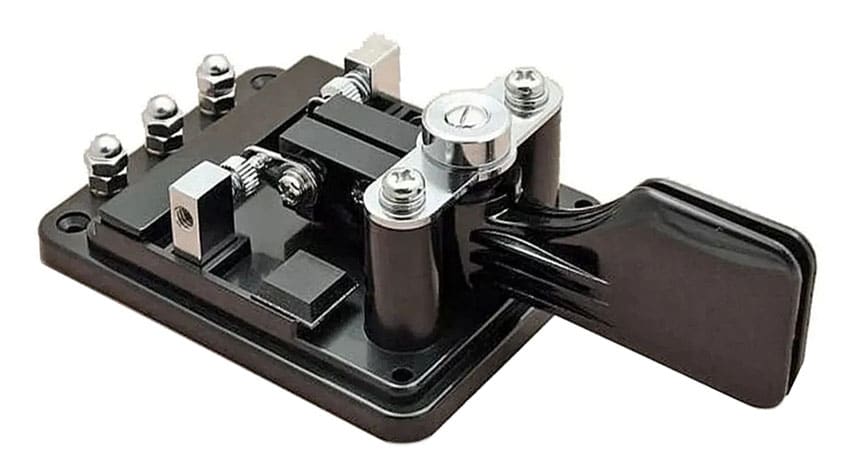
So what’s going on here? Obviously these keys look different. And indeed they are entirely different in function, even though they carry the identical model number.
The upper key is a single-lever paddle, and appears to be no longer available, except on the used market. The lower key, described as an “economy iambic” (i.e. dual-lever) key, is currently available online at an unusually wide range of prices, from US$21.29 to an eye-watering AU$260.00!
Do you own either of these keys? Send us a review!
And if someone offers to sell you a MK-701, make sure you ask for a photo of it first. 🙂
Quick notes
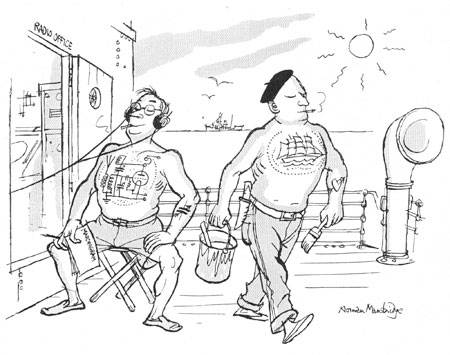
Marconi Mariner magazine
An updated and expanded list of Morse Code abbreviations and prosigns has just been published, and you can get it from the Free Stuff page. I was prompted to produce this list when I saw some “unconventional” information appearing on other people’s lists (e.g. CQ described as a single-character prosign). I believe that my list complies with ITU standards, but if you see anything that you disagree with, please tell me.
The Trans-Tasman Low-Band Contest runs 0800-1400 UTC Saturday 18 July on 160, 80 and 40 metres. Logs must be submitted in Cabrillo format within 7 days of the contest.
Photo flashback
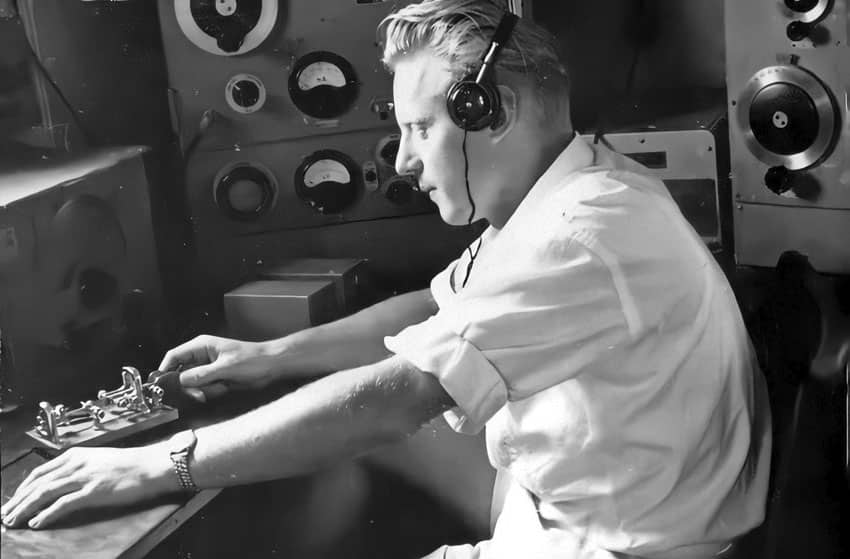
Photo: Oddvar Ulvang, Maritime Radio group on Facebook
R/O Arne Ulvang at work with his Vibroplex Original on the Norwegian freighter SS Congo LNXT in the 1950s.
Back to the beach
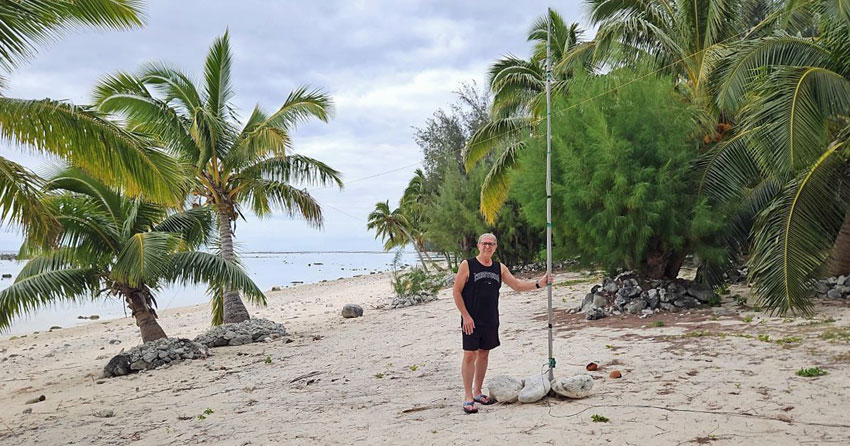
E51KEE at Rarotonga, 2024
Steve ZL2KE will be operating as E51KEE in Rarotonga, the South Cook Islands from 23 July to 14 August. This will be the third year in a row on his Holiday DXpedition in Rarotonga. He will be on CW mostly, with a bit of SSB.
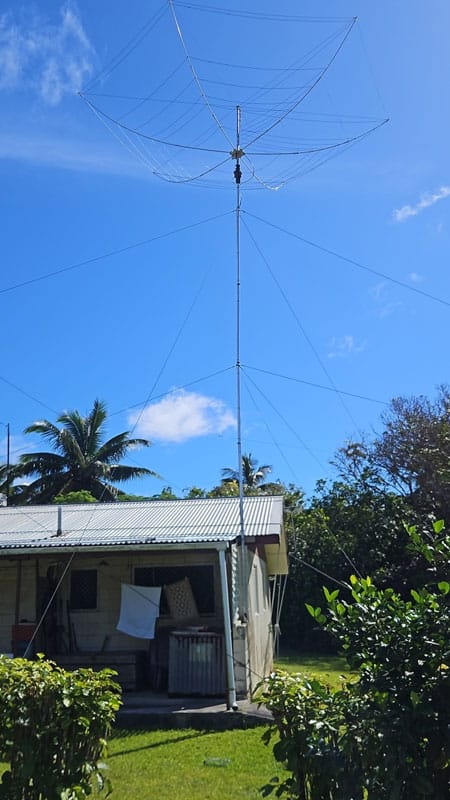 One of Steve’s first tasks is to survey the damage and form a team to repair the masts, Hex Beam and inverted Vees at the home of Jim E51JD, which were damaged by a storm a month ago.
Last year, Steve’s team straightened Jim’s Hex Beam mast (see photo).
Jim has been a Raro resident for over 5 decades and told Steve that the DX world would welcome CW as this mode is rarely used in the Cook Islands.
Steve will use an IC-7300 with quarter-wave verticals, an end-fed wire, and a ZS6BKW antenna. His QTH is a beach house next to the salt water lagoon.
Previously Steve’s signal had huge pile-ups especially on 20, 17 and 15m. If recent band conditions continue to be poor he may have to concentrate on 30 and 40m.
Last year he managed to check into NZ Net several times on 80m; hopefully propagation will allow him to QNI again.
Further details: E51KEE on QRZ.com
Special note for POTA chasers:
When possible, Steve will be activating CK-0002 Rarotonga Marine Park.
Bugs and yet more bugs
By Chris G5VZ
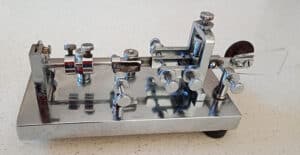 It’s been a very busy time for bug operators, particularly in northwestern Europe and the UK.
There is FOC Bug Day (all bands, including WARC bands as there is no scoring for QSOs) on Saturday 18 July.
It falls during FISTS Bug Key Week, which started on Monday 13 July and continue to Monday 20 July on all HF bands (but not WARC).
On Tuesday 14 July we had the Bug Users Group (BUG) BUG Nite. This runs on the second Tuesday each month in local evening hours. Calling often around 3523, 3533, 5373, 7033, 7113, 7123, 10113, 10123, 14033, 14113, 18083, 21033, 24903, 28033 kHz. “CQ BUG NITE”
The following day (Wednesday 15 July) was the FISTS Bug Key 24-hour Sprint on HF bands (but not WARC).
On Thursday evening at 1830 UTC there was the EU BUG Net on 7031 kHz. New members of the net will always be welcomed.
So it’s been a busy time for the bugs and there are still a few more days in which you can participate!
Thanks Chris. That’s an impressive list of bug events. Are any of our NZ and Australia amateurs interested in promoting some bug events? Let me know and let’s see if we can get more bugs on the air in our part of the world.
– ZL1NZ
Video: Single-valve transmitters
Mike Silva K6RRE builds one-valve, crystal-controlled CW transmitters, which can use a wide variety of valves giving various outputs up to 20W.
“I’m just doing this to keep out of (more) trouble, not selling them or anything,” Mike says.
“Every one puts out a clean note on 40m with a modern HC-49 crystal, 5-7 watts out with the video pentodes, 10 watts with the smaller audio tubes, and 15-20 watts with some of the larger tubes. They also easily meet FCC spectrum requirements with a pi-network output.
Here’s one of Mike transmitters running a 6V6 valve:
“The conclusion is (happily surprising to me) that it is quite possible to build a one-tube transmitter that has a clean spectrum, nice note, and uses modern small crystals. The one-tube transmitter got a bad rap in the past but it can be done well.”
See more of Mike’s transmitters.
Morse challenge
Send your answer via radiogram (or email if no propagation) to ZL1NZ.
Our previous Morse challenge asked why there are no longer any radio amateurs in Mille Roches. The answer is that the town was flooded in 1958 by the creation of the St Lawrence Seaway and now lies deep under water. Correct replies were received from VK3DRQ, ZL1ANY, ZL1AYN, ZL2KE and ZL3TK.
Net tip: QRY
We continue our look at Q signals with QRY.
As a question, QRY? means: “What is my turn?”
As a reply, or a direction, QRY… means: “Your turn is number …”
We haven’t used QRY on NZ Net, but you may encounter it on other nets, including VKCW Net.
QRY was used in the commercial wireless era. A ship calling a very busy coast station might be told “QRY28”. The Radio Officer would then have to hope that he didn’t lose propagation while waiting for 27 other vessels to do their traffic!
The A-Z of Q Signals
A well-run CW net is a lovely thing to experience. Communication between stations is quick and concise, and the net business is conducted with minimal time wasted.
As CW operators, we have many techniques to communicate quickly and efficiently. And if we know and use these techniques, we can often match or exceed the speed and accuracy of voice communication.
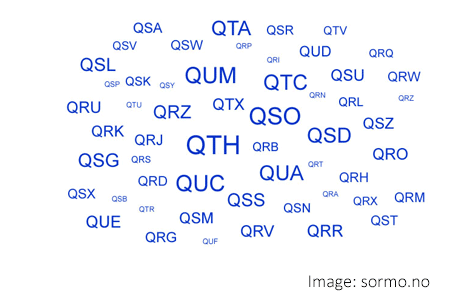
One of our most important tools is the set of Q Signals (or Q Codes), and in this series we look at the “essential” ones, in alphabetical order.
Advertising archive
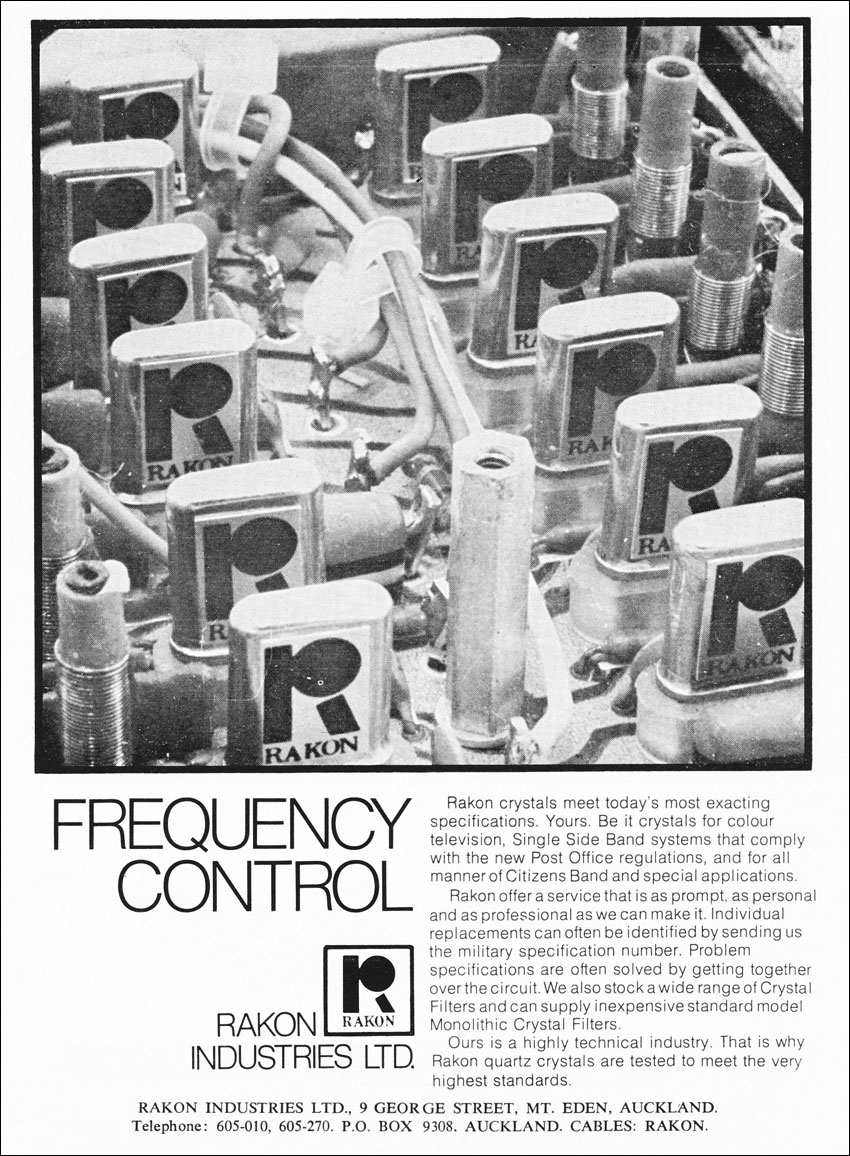
Break-In magazine, Jan-Feb 1976
Suggestions?
If you have suggestions on how to make the NZ Net better, or things you’d like to see covered in these newsletters, please contact ZL1NZ. Articles and photos will be gratefully received!
Thanks for reading, and I hope to hear you soon on the NZ Net!
—
Neil Sanderson ZL1NZ, Net Manager
New Zealand Net (NZ NET)

 Open the menu by clicking the “burger” icon at top right.
 Many menu items can be expanded to reveal subpages by clicking on the arrow. Click again to collapse the menu item.