
This is a free fortnightly newsletter about the New Zealand Net.
If you would like to be notified by email when a new edition is published, subscribe here.
Browse our Newsletter Archive and List of Net Tips.
Featured key: Previewing the new Frattini Mecograph type
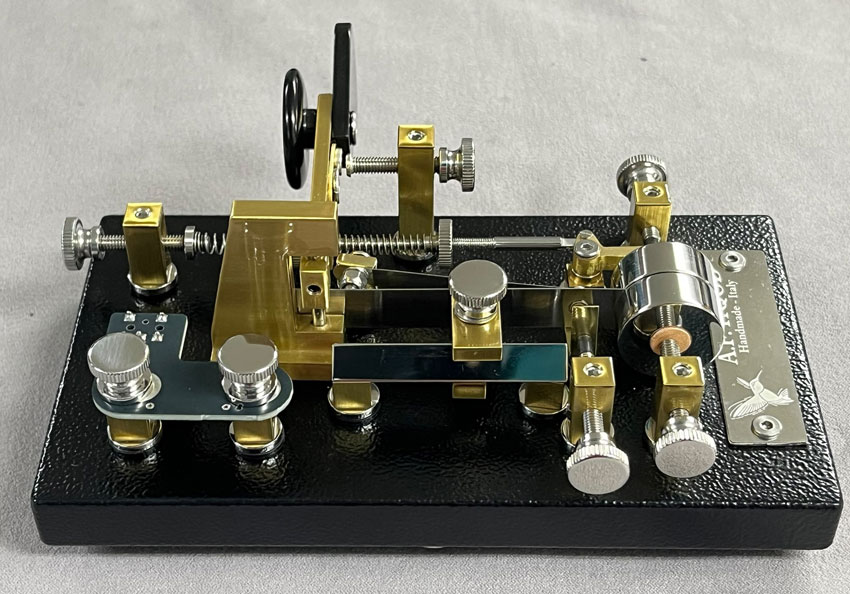
Words and photos by Gian Luca “Ian” Cazzola IK4EWX
SPECIAL TO NZ NET NEWS – A great new CW key has been born from our finest heritage.
Reading the manual of the Mecograph Model 3 (c1907) is a fascinating experience, even for those who do not own one. It offers insight into early industrial culture, the prevention of occupational illnesses among telegraph operators, and the ethics and integrity of two remarkable Americans, Mr Coffe and Mr Bellows. It is a truly inspiring read, especially in these complicated times.
The Mecograph was a revolutionary bug. Based on the release of force, it was a sophisticated device and costly to manufacture. But on this point, let us let its creators speak for themselves:
“There are 97 parts to a Mecograph. It takes more than two hundred operations in our factory to produce these parts ready to assemble. Every operation on each piece is done with appropriate machinery and special tools designed to fit it for the particular function the part has to perform.”
It was likely due to this manufacturing complexity that the project was abandoned after Mecograph was acquired by Vibroplex in 1913 — a move that nevertheless allowed Vibroplex to eliminate its most formidable competitor.
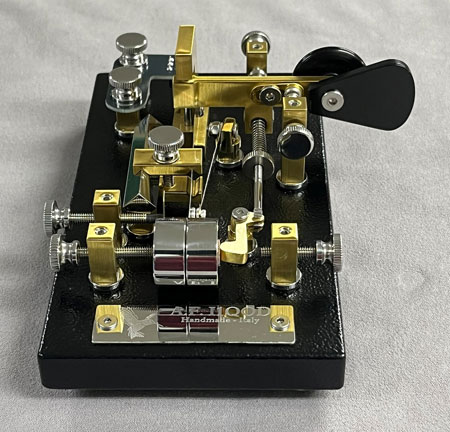 As the fortunate owner of two Mecograph Model 3s, I had long wished to see a re-edition of this great bug. Living in Italy, the home of masters of the telegraphic art like Piero Begali and Alberto Frattini, that dream felt within reach.
So, about a year ago, together with Carlo IK1XPB, we started a “moral suasion” effort targeting Alberto Frattini I1QOD, encouraging him to consider our proposal. In the end, Alberto agreed.
Alberto is not only an excellent QRQ telegraphist, but also an extraordinarily fine machinist (formerly quality control manager in the Italian aerospace industry) with a workshop exceptionally well-equipped with traditional machinery.
The immense effort required to produce the Frattini Type Mecograph is driven solely by the desire to satisfy a small group of friends and semi-automatic key enthusiasts, alongside his relentless pursuit of mechanical perfection.
Hence his decision to limit the production of this “new” bug to a very small, limited run. This re-edition features numerous small enhancements that make the key even more precise and enjoyable for the operator to use.
I am truly honored to preview the final prototype of the Frattini Type Mecograph key pictured here, which will soon enter production for a select group of lucky owners.
[Ian expects to receive his own Frattini Mecograph in the next few days.]
Quick notes
Current net frequency: 3535.0 kHz (due to poor local propagation on 40m)
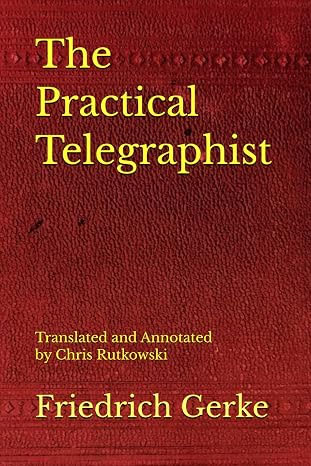
The Practical Telegraphist is the English translation of Friedrich Gerke’s writings from 1851. Gerke, of course, is the person mostly responsible for development of the International Morse Code, a significant refinement of the original code by Morse and Vail, and the code which we use to this day. For more than 175 years, Gerke’s book remained unknown in the English‑speaking world — buried in German archives, its insights inaccessible. This first edition finally brings that missing primary source into view and expands it. The book was produced by Chris Rutkowski, well-known author of The CW Way of Life. It is available to purchase online at NZ$34.16.
Editor wanted. ZL1NZ plans to step down as editor and publisher of this newsletter at the end of the year. If you’re an NZ Net member and would like to produce a net newsletter (starting any time between now and the end of this year) please contact ZL1NZ to discuss.
Photo flashback
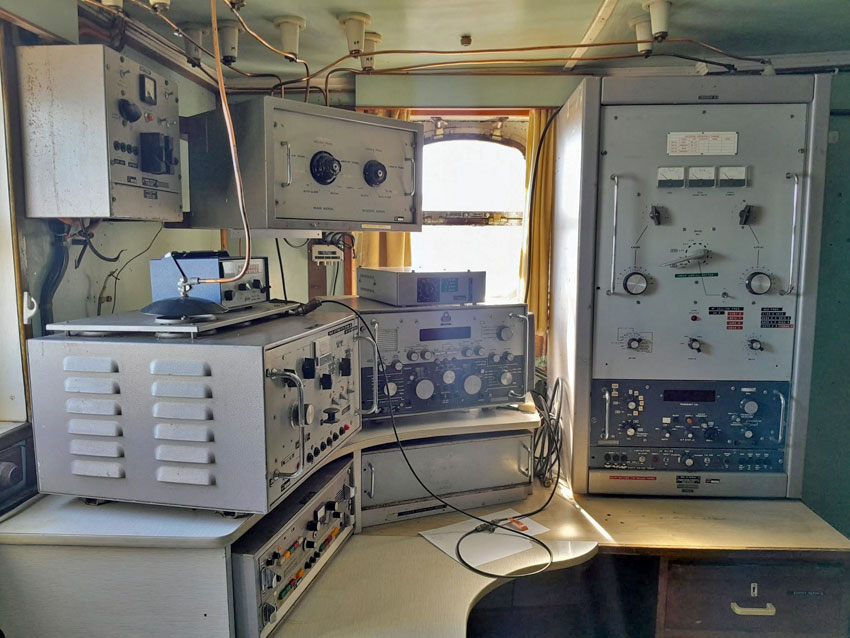
This photo shows the radio room of the former Australian lighthouse tender MV Cape Don. This 2140-tonne ship was launched in 1962 and was decommissioned in 1990 before serving for another ten years as a cargo/passenger vessel in the South Pacific. She has been berthed in Sydney for the past couple of decades while volunteers worked on preserving her as a museum.
But it looks like Cape Don’s days may be numbered, as state maritime authorities seized the ship last weekend, stating that it was at risk of sinking – a claim rejected by the non-profit Sea Heritage Foundation which said it is working on a plan to drydock the ship, something that was last done 26 years ago.
The Foundation’s preservation efforts have included the radio room where the Apollo receiver is reported to be working. The group also participates in the annual Lighthouse Lightship Weekend on amateur radio.
CQD padlock
 Words and photos by Herman VK2IXV
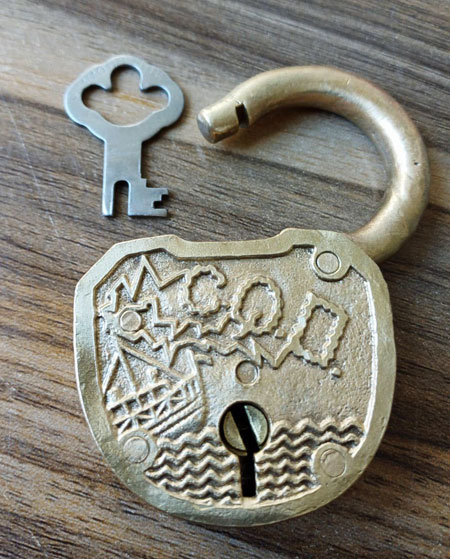
Here’s a padlock that commemorates the use of Wireless Telegraphy (W/T) on ships.
The lock, which has a brass body and shackle, was designed by George M Miller of the Slaymaker Lock Manufacturing Company in Lancaster, Pennsylvania. A patent was applied for in April 1910, and granted in January 1911. Slaymaker then made the padlocks for Simmons Hardware Company in St Louis, Missouri, which offered them in their catalogues from 1910 to 1917.
The front of the lock’s face is embossed with an image of a ship, disappearing beneath the waves while sending the wireless distress signal CQD, portrayed as lighting bolts emerging from the ship’s aerial.
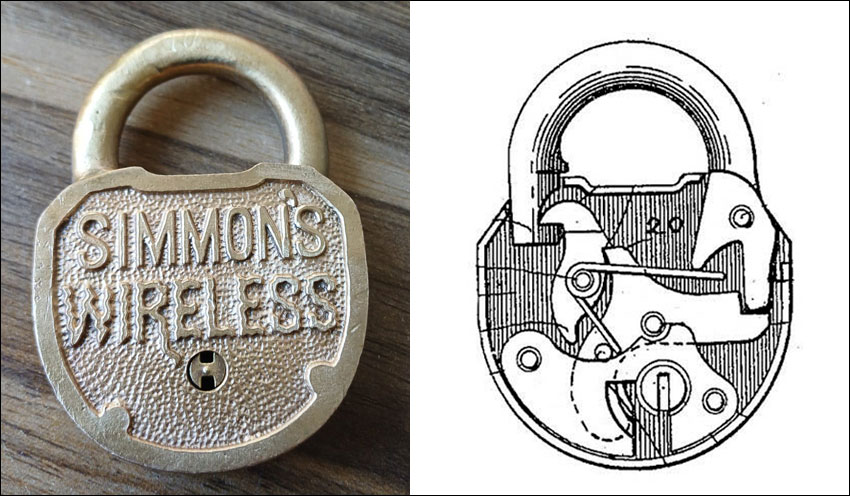
The rear is embossed with the words SIMMON’S WIRELESS. The lock’s dimensions are 5 x 7 x 1 cm, and it weighs 134 grams.
Although never officially recorded by Simmons, it appears that their CQD/Wireless lock was made to commemorate the introduction of wireless telegraphy in the Maritime industry in 1901.
The popularity and sales of this padlock increased thanks to the widely publicised collision between the Italian vessel Florida and the British vessel Republic (callsign MKC) off the island of Nantucket, MA in 1910. A second disaster followed on 15 April 1912 when Titanic (callsign MGY) sank approx 370 miles SE of Newfoundland. In both cases, wireless telegraphy and the use of the distress signal CQD played a major role in the saving of many lives.
These locks are now hard to come by, especially the ones with a fitting key. For a look at the inside of this lock, see Google Patent US981784A.
A bit more about the distress signals CQD and SOS
In 1890 Guglielmo Marconi invented Wireless Telegraphy. The emphasis being on Wire-less, i.e. radio signals, not through wires or cables, but through the ether or free space.
In May 1901, the steamer Lake Champlain (callsign MLN) was the first British merchant vessel to be equipped with Marconi Wireless equipment. Please note that the 3-letter radio callsigns of ships equipped with a Marconi Wireless Telegraph system started with the letter M.
In those early days of W/T, there was no uniform worldwide Distress Signal Distress. However, since 1st February 1904 radio operators employed by the British Marconi Company used CQD.
This Maritime Distress Call was introduced by the Marconi Company by adding a D (for Distress) to the already existing landline call CQ (calling all stations). But CQD was never adopted on an international scale.
In 1906, at the 2nd Radiotelegraph Convention, held in Berlin, an important decision was made by the 27 participating countries, to form a uniform distress signal. CQD was rejected as it was apparently too complex to transmit and too tiring on the wrist. The countries in attendance favoured di-di-di-dah-dah-dah-di-di-dit (later denoted by SOS) which was already in use by the German company Telefunken.
It was chosen for its distinct rhythmic pattern and its ability to be easily heard in adverse conditions. Although the use of SOS was officially endorsed in 1908, CQD remained in common use by Marconi trained R/Os. However, during the Titanic disaster on 15 April 1912, the ship’s Marconi R/Os used both CQD and SOS. After 1912 CQD just faded away and was never used again.
Video: R/O Bernhard Schlörit on M/V Nedlloyd Caledonia
Net tip: QSM
We continue our look at Q signals with QSM.
As a question, QSM? means: “Shall I repeat the last telegram which I sent you (or some previous telegram)?”
As a reply, or a statement, QSM means: “Repeat the last telegram which you sent me (or telegram(s) number(s) …).”
The A-Z of Q Signals
A well-run CW net is a lovely thing to experience. Communication between stations is quick and concise, and the net business is conducted with minimal time wasted.
As CW operators, we have many techniques to communicate quickly and efficiently. And if we know and use these techniques, we can often match or exceed the speed and accuracy of voice communication.
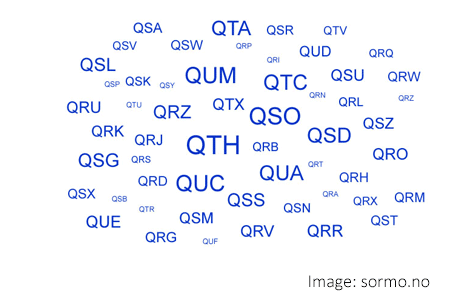
One of our most important tools is the set of Q Signals (or Q Codes), and in this series we look at the “essential” ones, in alphabetical order.
Morse challenge
Send your answer via radiogram (or email if no propagation) to ZL1NZ.
The answer to our previous Morse Challenge: ZL4RY was using an A&W McCarthy (Dunedin) bug. Correct answers were received from OE1HFC, ZL1ANY and ZL3TK.
Advertising archive
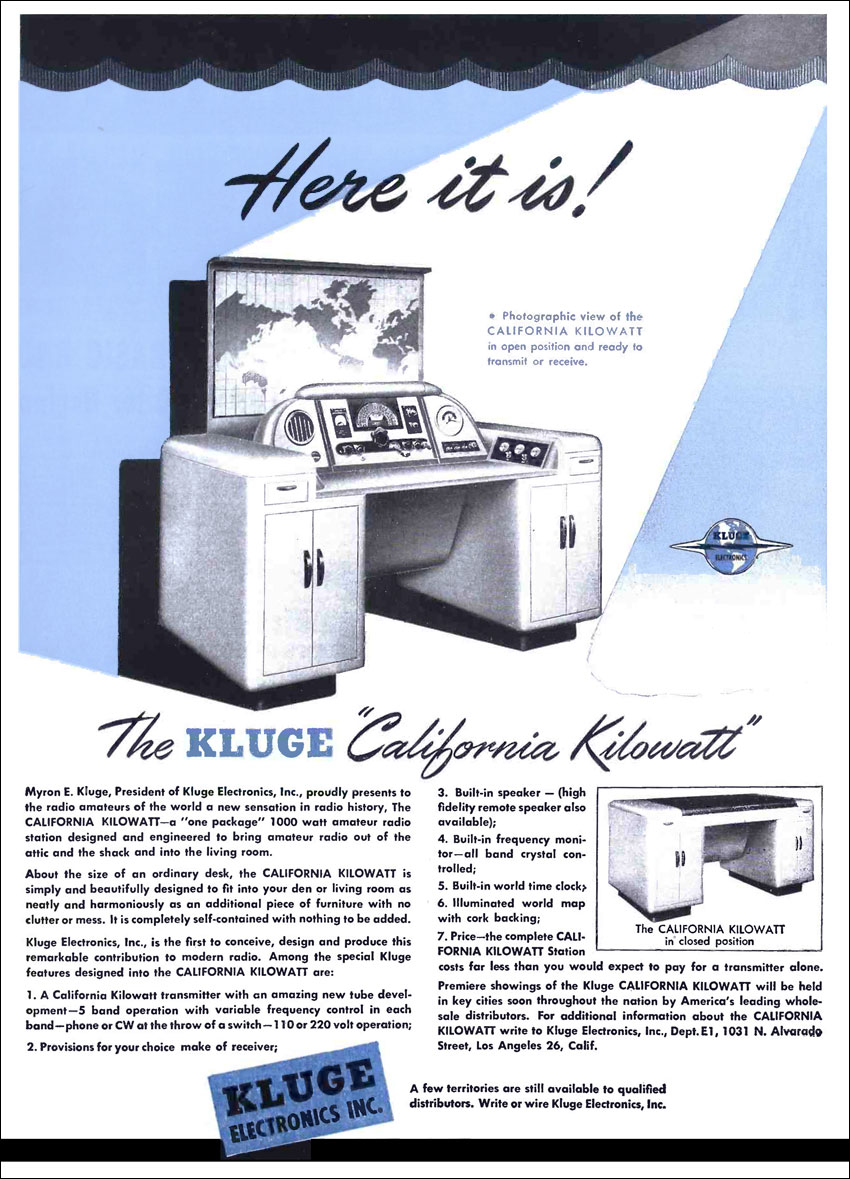
Radio Craft magazine, March 1946
Despite this impressive advertisement in 1946, no one seems to know if any California Kilowatts were actually built. See more.
NZ Net tally board
Suggestions?
If you have suggestions on how to make the NZ Net better, or things you’d like to see covered in these newsletters, please contact ZL1NZ.
Articles and photos will be gratefully received but please do not submit AI-generated content.
—
Neil ZL1NZ, Editor


 Open the menu by clicking the “burger” icon at top right.
 Many menu items can be expanded to reveal subpages by clicking on the arrow. Click again to collapse the menu item.