
This is a free fortnightly newsletter about the New Zealand Net.
If you would like to be notified by email when a new edition is published, subscribe here.
Browse our Newsletter Archive and List of Net Tips.
Featured key
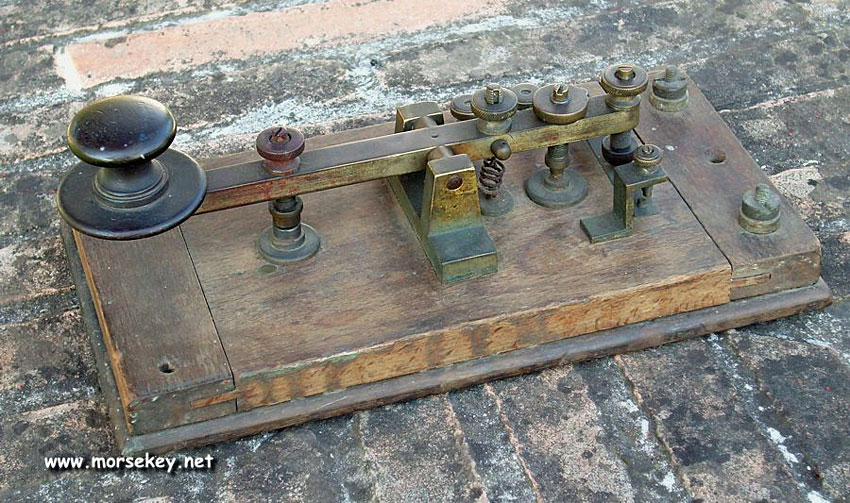
Photo: morsekey.net
By Eliseo IK6BAK, morsekey.net
This Conalbi key resembles in all respects the first Marconi keys of the early 1900s, from the shape of the knob, to the slotted screws, to the very robust contacts due to the strong currents that at that time a telegraph key with the first spark transmitters had to withstand. An additional contact can be seen at the rear which, as for the Marconi, was used to silence the receiver during transmission.
Pietro Conalbi was at the beginning of the 20th century a mechanical engraving workshop in Milan. It was involved in, among other things, the construction of the Milan Railway Station. As often happened in the past, the mastery in working metals, brass in particular, was also put to good use for the construction of different objects, such as Morse keys.
This key has certainly been used; you can see the signs of wear on the screws and on the knob. Fortunately, it has survived complete with all its parts. A very rare key, an example of our artisans who today as then were able to produce objects of great value.
From original Italian, via Google Translate
Quick notes
 Straight Key Night is just two weeks away on Sunday 7 June from 2000 to 2100 NZT (0800-0900 UTC) on 80 metres. That’s the first Sunday in June, rather than the usual second Sunday in June, because the SKN manager got confused while sending the announcement to every radio club in the country! Get details.
Jock White Field Days 2026 report and complete scores have been released. Since they weren’t ready in time for the next Break-In, you can access them here.
Dayton Hamvention has just wrapped up for another year. Here’s a video tour. It’s almost 3 hours! The tour starts at 4:10 on the video.
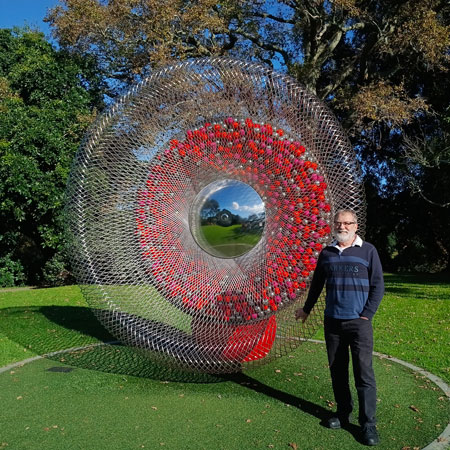
Photo: This object, beautifully made in stainless steel, sits in Monte Cecilia Park in Auckland. I am wondering how to connect my handheld to it. 🙂
Photo flashback
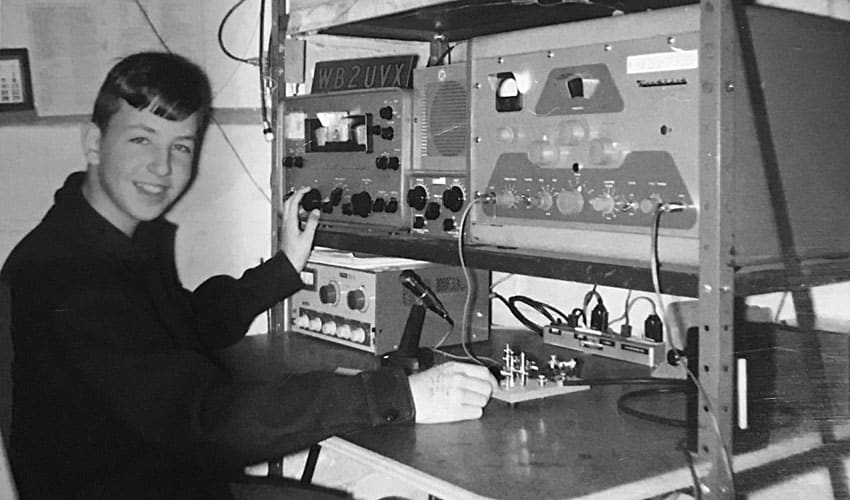
Photo: N2JT, Facebook group Ham Radio – 50 Years and Back
Jack N2JT describes the photo above:
“My station in 1966. HQ-170A, DX-100B. And a bad haircut! I was WB2UVX back then. QTH Maplewood NJ. Became KB2NY when I got my Advanced ticket.”
60 years since Kaitawa tragedy
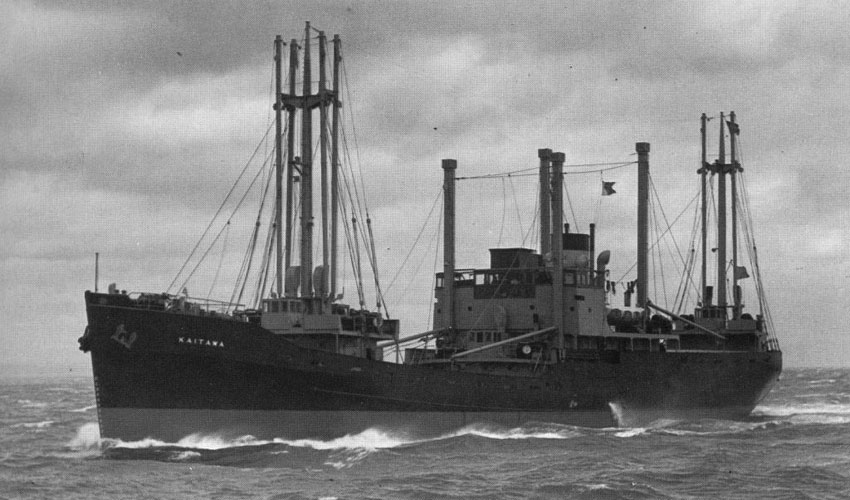
Kaitawa in 1949
Sixty years ago, on the evening of 23 May 1966, the Union Steamship Company’s collier TSMV Kaitawa was lost with all hands near Cape Reinga.
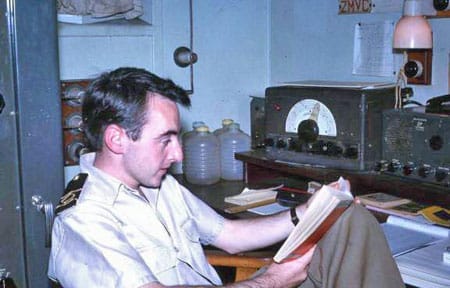
Ron Moloney was Radio Officer on Kaitawa in 1963. This photo shows him in Kaitawa’s radio room.
Her crew of 29 included a young Canadian named Philip Mowat, who was making his first trip to sea as a newly qualified Radio Officer.
It was a standard voyage for the little ship, but this time the weather turned particularly nasty. Fragments of a Mayday message were received, in a Canadian accent, on 2182 kHz at Auckland Radio ZLD. Unfortunately, due to static and fading, Kaitawa’s position was not clear.
One body was found, along with debris, and the wreck was found by sonar some time later.
Among the many unanswered questions about this tragedy:
Why did the Radio Officer send the distress message by radiotelephone rather than by the more effective wireless telegraphy? The ship had MF equipment for W/T and R/T, plus an emergency W/T transmitter.
Roger ZL2RX, a former R/O who sailed on another USSC collier, has produced a detailed analysis of the Kaitawa tragedy, which you can read at maritimeradio.org.
Video
Net tip: QRT
We continue our look at Q signals with QRT.
As a question, QRT? means: “Shall I stop sending?”
As a reply, or a direction, QRT means: “Stop sending.”
QRT is used incorrectly by some radio amateurs.
QRT does NOT mean “I am closing my station.” That would be CL, sent as two characters (not run together) at the end of the final transmission.
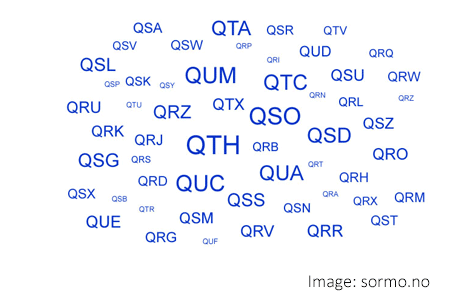
The A-Z of Q Signals
A well-run CW net is a lovely thing to experience. Communication between stations is quick and concise, and the net business is conducted with minimal time wasted.
As CW operators, we have many techniques to communicate quickly and efficiently. And if we know and use these techniques, we can often match or exceed the speed and accuracy of voice communication.
One of our most important tools is the set of Q Signals (or Q Codes), and in this series we look at the “essential” ones, in alphabetical order.
Morse challenge
Send your answer via radiogram (or email if no propagation) to ZL1NZ.
In the previous edition, the Morse Challenge related to the Q signals QRQ and QRS. Answers were received from VK3WOW, ZL1ANY and ZL1AYN.
Advertising archive
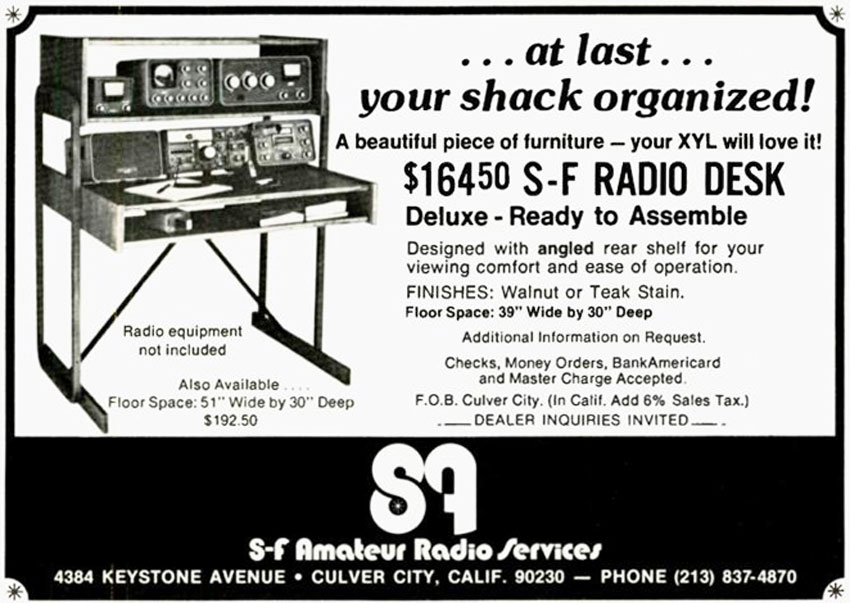
Date unknown
Suggestions?
If you have suggestions on how to make the NZ Net better, or things you’d like to see covered in these newsletters, please contact ZL1NZ. Articles and photos will be gratefully received!
Thanks for reading, and I hope to hear you soon on the NZ Net!
—
Neil Sanderson ZL1NZ, Net Manager
New Zealand Net (NZ NET)


 Open the menu by clicking the “burger” icon at top right.
 Many menu items can be expanded to reveal subpages by clicking on the arrow. Click again to collapse the menu item.