
This is a free fortnightly newsletter about the New Zealand Net.
If you would like to be notified by email when a new edition is published, subscribe here.
Browse our Newsletter Archive and List of Net Tips.
Featured key
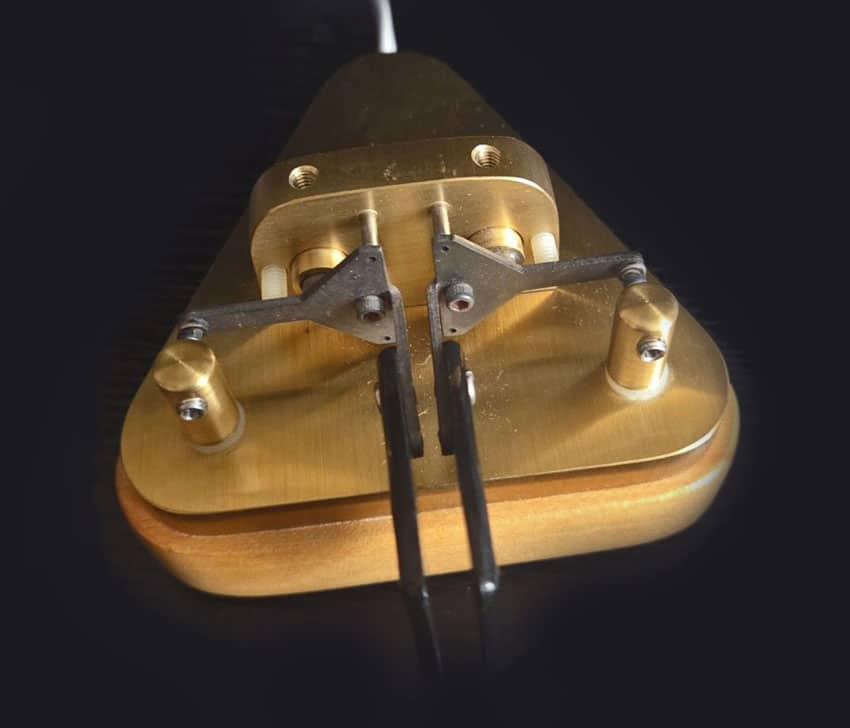
Photo: Michael Pituley on Facebook
These paddles, with their distinctive triangular base, are the Scotia model, made by Hamco of Eureka, California.
Hamco produced this key from 1978 to 1982.
After the company was bought by Vibroplex, the Scotia key reappeared as the Vibroplex Brass Racer. It is no longer in production.
Quick notes
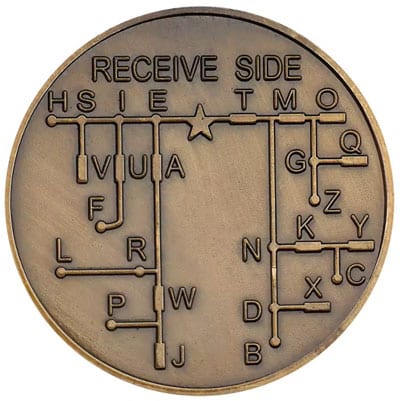 This rather odd “coin” was discovered (on Ali Express) by Graeme ZL2TE. I think we should file it under “Yet another way to represent the International Morse Code!” (Want one? It’s only $2 with free shipping.)
It’s Field Day contest weekend, probably the biggest event on the NZ amateur radio calendar. Since most of our members will be in the fieldg, we are not planning to have a net session on Saturday. But, anyone who’s free is welcome to run the net if they wish.
The answer to the Morse Challenge in NZ Net News 178 was: Jan/Venlo/Intrepid. Correct answers were received from ZL1ANY, ZL1AYN and ZL2KE.
Russian military FSK on 40m. Back in NZ Net News 162, we talked about the FSK signals centred on 7045.0 and 7066.5 kHz. Here’s more information about them.
Photo flashback
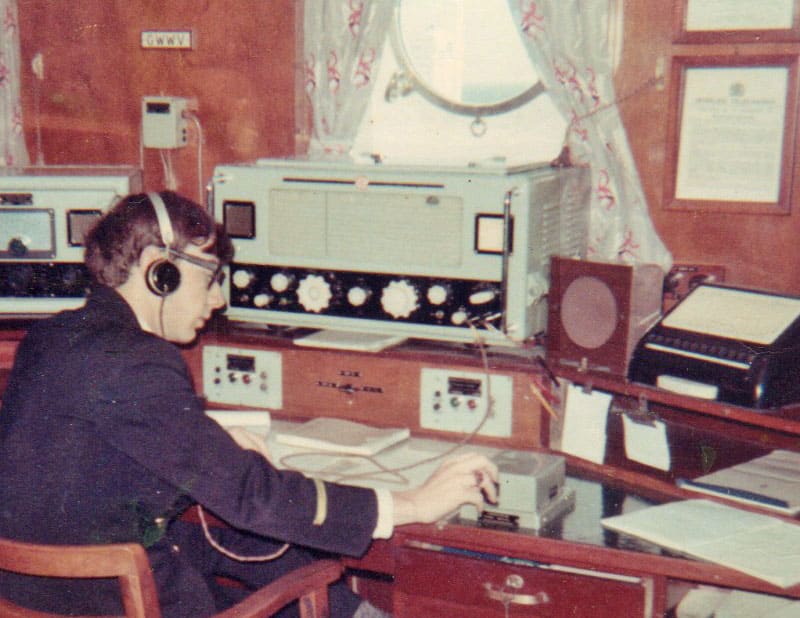
Malcolm Cook at the key aboard SS Makrana GWWV in 1969. Photo: Malcolm Cook on Facebook
Video: Ship to shore
By Neil ZL1NZ
Two weeks ago, I got to do something that’s been on my bucket list for quite a while. I took a ride on the Whanganui River aboard the 127-year-old paddle steamer Waimarie. This ship is the last coal-fired paddle wheeler in the southern hemisphere and one of only a handful in the world.
Waimarie has a remarkable history, and the skipper gave an excellent commentary about the river and the days when several vessels similar to Waimarie made multi-day trips north from Whanganui, travelling over dozens of rapids to reach remote farms and settlements. The ship is 100 feet long, but with a draft of just 14 inches!
But what I had really come for, was a chance to observe the ship-to-shore communications, which you can see in this video I took:
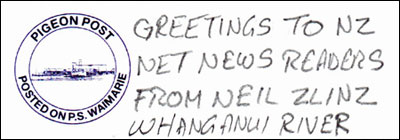
Baxter the pigeon carried about a dozen pigeongrams, written on tiny slips of paper, just 8cm x 2.5cm, rolled up in a cannister on his leg.
He comes from a long line of avian traffic handlers. In the old days, the steamers would send messages back to their company offices with details of cargos, passengers and river conditions.
 If you decide to visit Whanganui, I highly recommend a river tour aboard Waimarie. The town also boasts a vintage radio museum (mainly broadcast receivers) and a radio communications museum is currently being set up.
Net tip: QRK
We continue our look at Q signals with QRK.
When sent with a question mark, QRK? means “What is the intelligibility of my signals (or those of …)?”
The reply has five variations, QRK1 – QRK5, meaning “Your intelligibility (or that of …) is:
1 (bad)
2 (poor)
3 (fair)
4 (good)
5 (excellent)”
Notice that QRK follows on naturally from QRI (see NZ Net News 178) which refers to signal tone.
QRK is typically accompanied by QSA (signal strength). For example, “QRK5 QSA5”.
The A-Z of Q Signals
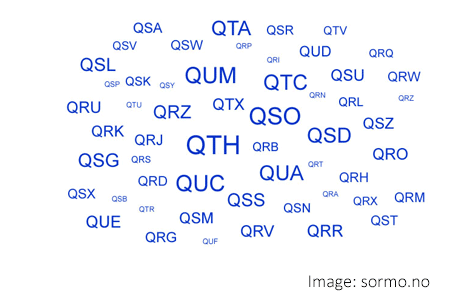
A well-run CW net is a lovely thing to experience. Communication between stations is quick and concise, and the net business is conducted with minimal time wasted.
As CW operators, we have many techniques to communicate quickly and efficiently. And if we know and use these techniques, we can often match or exceed the speed and accuracy of voice communication.
One of our most important tools is the set of Q Signals (or Q Codes), and in this series we look at the “essential” ones, in alphabetical order.
Advertising archive
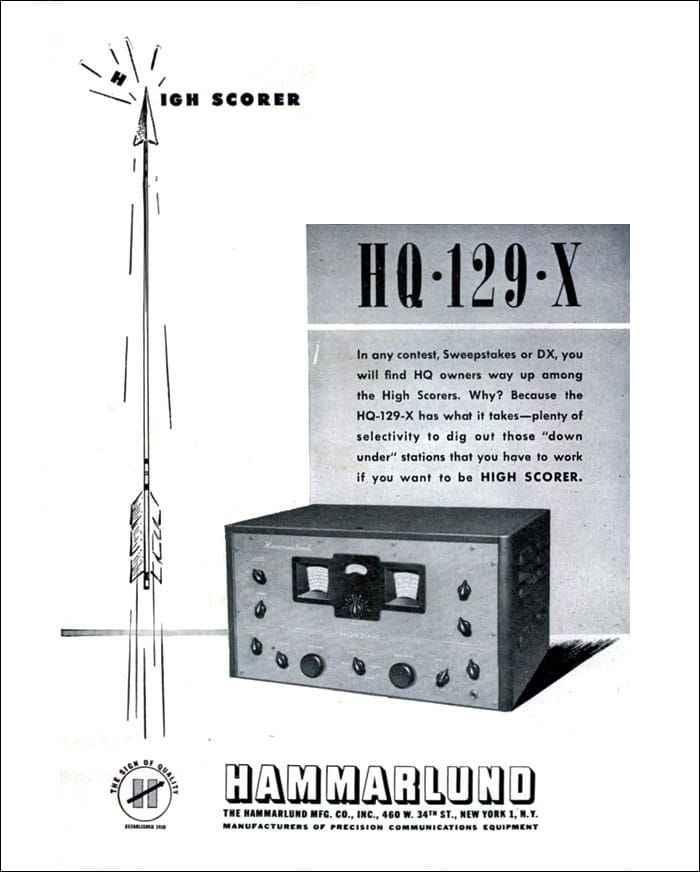
1947
Suggestions?
If you have suggestions on how to make the NZ Net better, or things you’d like to see covered in these newsletters, please contact ZL1NZ. Articles and photos will be gratefully received!
Thanks for reading, and I hope to hear you soon on the NZ Net!
—
Neil Sanderson ZL1NZ, Net Manager
New Zealand Net (NZ NET)


 Open the menu by clicking the “burger” icon at top right.
 Many menu items can be expanded to reveal subpages by clicking on the arrow. Click again to collapse the menu item.